
WEEK 5
Dear Sisters and Brothers,
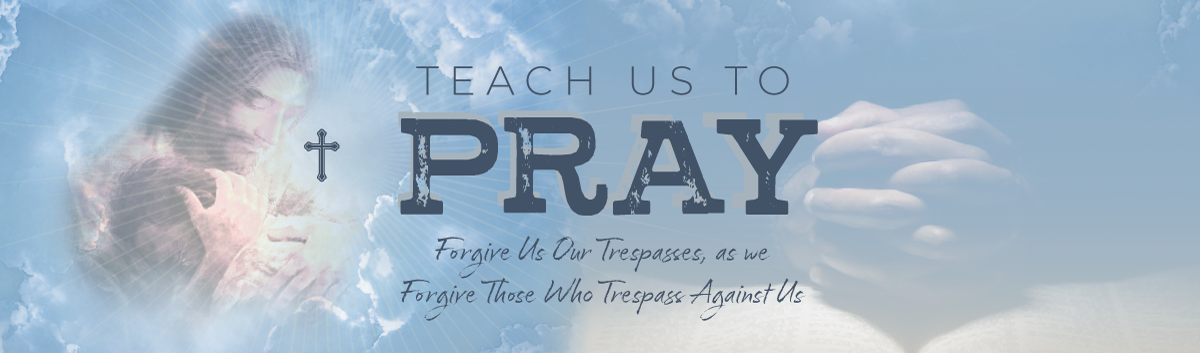
We focus this week on forgiveness. We have arrived at the words of the Lord’s Prayer: “Forgive us our trespasses, as we forgive those who trespass against us.” As we begin it may prove helpful to overlay the word trespasses with its alternatives: debts-debtors and sins-sinners. We can see these variations more keenly if we compare the more familiar version, passed on in Matthew (6:9-13) with the less familiar version of the Lukan tradition (see Luke 11:1-4). Luke chooses the actual word for sin: “forgive us our sins.” Both employ the concept of debt or indebtedness. Debts convey something owed. A sin can be understood as a moral debt. By contrast, trespass could make us think of signs like “private property / no trespassing / keep out!” Each different turn of phrase sheds a bit more light and nuance.
With this petition, we are seeking pardon for overstepping or crossing a line which creates a debt, inflicts injury, or causes harm. At the same time, we link the request to a willingness to extend the same grace to those who have wronged us. This is the only conditional petition in the Lord’s Prayer. The implication being that we shall not receive forgiveness if we do not extend it.
And that is probably the best place to begin, to acknowledge that we have sinned and we are forgiven. More precisely, our good Father will extend His grace and mercy to us whenever we seek it with contrite hearts, as we do at the beginning of each holy Mass, and in a particular and effective way through the grace of the Sacrament in Reconciliation. So, let us first recognize that in spite of whatever we have done, the Father loves us and is ready to forgive us. Turn to the image of the father in the parable of the two sons (see Lk 15). He awaits his son’s return and even before his confession is complete, is restoring him to the fullness of sonship he had abandoned. Recognizing how we are forgiven allows us to forgive others. Forgiven people forgive people.
Forgiveness lies at the heart of the Gospel message. Consider the man lowered into Jesus’ midst on a stretcher. Jesus forgives him before extending physical healing, mending the soul before making the body whole (Lk 5:17-26). Or consider Peter’s question: how many times must I forgive, as many as seven times? No, Jesus says, but seventy-seven times. In other words, limitless forgiveness. See The Chosen which helps bring this moment to life in Peter’s life.
If we are challenged to forgive, if we experience rancor or grudge or some hardness of heart, this key phrase from the Lord’s Prayer can be deeply convicting for us. The Catechism reminds us:
“God’s mercy cannot penetrate our hearts as long as we have not forgiven those who have trespassed against us... Forgiveness is a high-point of Christian prayer.” CCC §2840
So we begin, some of us slowly, others more freely to acknowledge our sins and to ask God to forgive us. That is the very heart of the Sacrament of Confession. As your pastor, I encourage everyone to seek out the Sacrament at least once a year, but even better, with every change of season: winter, spring, summer, and fall.
In Confession, we verbally express sorrow for our trespasses and receive sacramental absolution from God through the priest. The words of the Our Father anticipate that moment; it is a daily plea for mercy, preparing our hearts for the deeper healing that comes through the sacrament. That is why St. John Paul II wrote: “Each time we say, ‘Forgive us our trespasses,’ we are already beginning a confession — from the heart. The Sacrament of Reconciliation completes that movement.”
This week we recognize the power and centrality of forgiveness, above all the need to be quick to forgive and extend mercy, most especially following the example of our Father who is so good to us.
God be with you!
Fr. Joel